Your dog’s microchip hasn’t been scanned since the day it was implanted. That was three years ago. So is it even still working?
This is one of the most common worries pet parents have, and it makes sense. You cannot see the chip. You cannot feel it after the first few days. There is no light that blinks to tell you it is fine. So the silence feels like a problem, even when nothing is wrong.
Here is the short answer. Microchips almost never stop working. But there is a real risk hiding nearby, and it has nothing to do with the chip itself.
Do dog microchips actually stop working?
Rarely. A microchip is a tiny device, about the size of a grain of rice, sealed inside a glass casing. It has no battery. It does not run out of power. It sits quietly under your dog’s skin until a scanner sends it a signal, and then it sends back its ID number.
Because there is no battery and no moving parts, there is very little that can break. The two failure types that do get talked about are chip migration and scanner mismatch, and both are more myth than menace once you understand them.
Chip migration means the chip shifts slightly from its original spot, usually between the shoulder blades, to somewhere nearby. This does not stop the chip from working. It just means a scanner has to be swept over a wider area to find it, which is why vets and shelters are trained to scan the whole body, not just one spot.
Scanner mismatch used to be a real issue when some scanners could only read certain chip brands. Most shelters and vet clinics now use universal scanners that read all major microchip frequencies, so this problem has mostly disappeared.
So the chip itself is not usually the weak link. The weak link is what happens after it is implanted.
The real risk is not the chip, it is unregistered or outdated info
Here is the part most pet owners do not know. Getting the chip implanted is only step one. If that chip is never registered, or if the contact details on file are old, the chip can be scanned perfectly and still lead nowhere.
Research from JAVMA found that only 58.1% of microchipped animals in shelters were actually registered. That means a huge number of chips work exactly as they should, get scanned, and still cannot connect a lost pet back to their owner.
And when reunification does fail for a registered pet, the top reason was an outdated phone number, responsible for 35.4% of failed cases.
This is the gap that actually costs pets their way home. Not chip failure. Missing or stale registration.
Register your pet’s microchip here if you are not sure yours is on file, or if it has been a while since you updated anything.
Signs your dog’s microchip might not be scanning right
Most of the time, if a chip does not scan, it is not the chip. It is one of these situations instead.
| Sign | What it usually means |
|---|---|
| Chip was implanted years ago, never checked since | Chip is likely fine, but registration may be outdated |
| Vet mentions the chip took a couple of sweeps to find | Normal, this is chip migration, not failure |
| Shelter says “no chip found” after an adoption | Could be a very old chip type or an implant that never took |
| You moved or changed your number and never updated it | Chip works, but contact info does not match you anymore |
| You are not sure which registry your dog is even listed with | Common with pets adopted or rehomed, worth checking directly |
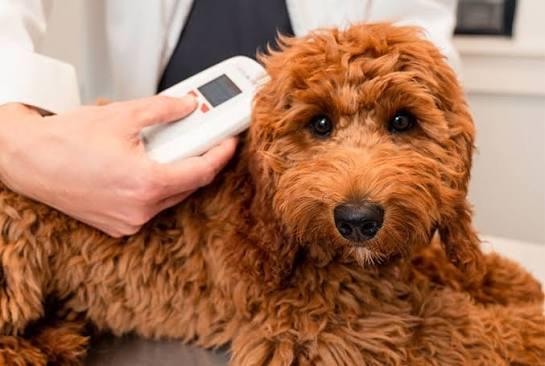
If you want to know for certain, ask your vet to do a quick scan at your dog’s next checkup. It takes seconds and gives you real peace of mind instead of a guess.
What to do if you are not sure your chip is active
Start with your dog’s paperwork. Every microchip comes with a registration form or a card with the ID number on it. If you still have that, you can look up which registry it is tied to.
If you cannot find any paperwork, or you inherited a pet without full records, your vet can scan the chip and give you the ID number on the spot. From there, checking or updating your registration takes a few minutes.
Cost is often the thing that stops people from getting this sorted, so here is what registration actually runs. See current registration pricing here to compare your options, all one time payments with no renewals to remember.
Registering a puppy for the first time works the same way. If you are just starting out, this walkthrough on easy microchip registration for puppies covers it step by step.
And if you want to understand what is actually happening under your dog’s skin, this breakdown of the anatomy of a dog’s microchip explains it in plain terms.
Why this matters more than people think
Dogs with a microchip are returned to their owners 52.2% of the time, compared to just 21.9% for dogs without one. That gap is not really about the chip’s technology. It is about what the chip is connected to. A chip with current, correct information behind it is what makes that difference real.
If you have been putting off checking your dog’s registration because you assumed the chip “just works” on its own, this is your sign to double check. It takes less time than reading this blog.
FAQ
Q1. Can a dog microchip really stop working?
It is very rare. Microchips have no battery and no moving parts, so there is little that can fail. Most “not working” cases are actually registration problems, not chip problems.
Q2. How do I know if my dog’s microchip is still active?
Ask your vet to scan it at your next visit. This confirms the chip is readable. Then check your registration details separately to make sure they are current.
Q3. What is chip migration and is it dangerous?
Chip migration is when the chip shifts slightly from its original spot. It is not dangerous and does not affect how the chip works. Vets scan the whole body to account for this.
Q4. Why did the shelter say they could not find my dog’s chip?
This can happen with very old chip types or if the implant did not take properly. It is uncommon, but a full body scan usually settles the question either way.
Q5. Does a microchip expire?
No. Microchips do not expire and do not need to be replaced. What can go out of date is your contact information tied to the registration.
Q6. How often should I check my dog’s microchip?
Once a year at your annual vet visit is enough. It only takes a quick scan and confirms everything is working as expected.
Q7. What happens if my contact info is outdated on the registration?
If your dog is found and scanned, the shelter or vet will try to reach the number or address on file. If that information is old, they cannot reach you, even though the chip itself worked perfectly.
Q8. Can I update my dog’s microchip information myself?
Yes. Most registries let you log in and update your contact details any time your address, phone number, or email changes.
Q9. Is a microchip enough on its own to get my dog back if lost?
It significantly improves your odds, but it works best alongside an ID tag and a currently registered chip. All three together give the highest chance of reunification.
Q10. My dog was adopted and I don’t know if the chip is registered. What now?
Ask your vet to scan for the chip ID number, then search for which registry holds it. If it turns out to be unregistered or outdated, you can register or update it directly.
A microchip is not something you need to worry about once it is in and working right. The technology holds up on its own. What needs your attention is the paperwork behind it, because that is the part that actually decides whether your dog finds their way back to you. Check your pet’s registration status here if it has been a while since you looked.