A pet microchip is one of the simplest ways to give your dog or cat permanent identification. It is a tiny electronic device, about the size of a grain of rice, placed under your pet’s skin. Unlike a collar or ID tag, it cannot easily fall off, get lost, or become unreadable.
But there is often confusion about what a microchip actually does. A pet microchip is not a GPS tracker, and it does not show your pet’s live location. Instead, it contains a unique identification number that can be read by a compatible microchip scanner. That number can then be searched in a pet microchip registry to find the owner’s contact information when the pet is registered.
For pet owners, understanding how microchipping works—and making sure the chip is properly registered—is an important part of responsible pet care.
If your pet already has a microchip, you can take the next step and register your pet’s microchip with NMR.
What Is a Pet Microchip?
A pet microchip is a small, passive RFID (Radio Frequency Identification) transponder designed for permanent pet identification. It is enclosed in a biocompatible glass casing and is implanted underneath the pet’s skin, commonly between the shoulder blades.
The microchip itself does not contain your name, phone number, home address, or GPS information. Instead, it carries a unique identification number. When a veterinarian, animal shelter, rescue organization, or animal control professional scans the chip, that number appears on the scanner.
The identification number can then be searched through an appropriate pet microchip database. If the chip has been registered and your information is current, the registry can help connect the found pet with its owner.
This is why pet microchip registration is just as important as having the chip implanted.
How Does a Pet Microchip Work?
The process is actually quite simple.
First, a veterinarian or other qualified professional implants the microchip under your pet’s skin. The chip remains inactive until a scanner is placed close to it.
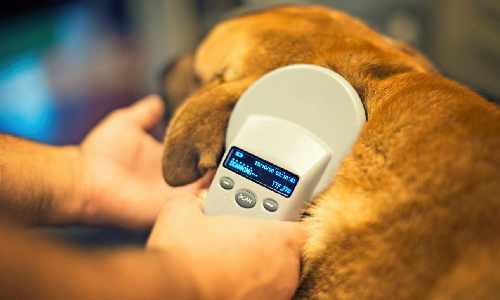
When a scanner passes over the microchip, it sends a radio-frequency signal. The passive chip responds by transmitting its unique identification number back to the scanner. The number is then displayed on the scanner’s screen.
The next step is the most important one.
The person who found the pet or the shelter staff uses the microchip number to perform a microchip lookup. If the number is connected to a current registration record, they can use the available contact information to reach the owner.
In simple terms:
Microchip → Unique ID Number → Microchip Registry → Owner Contact Information → Pet Reunited With Family
The technology is simple, but the registration information behind it makes the system useful.
What Information Does a Pet Microchip Store?
One common misconception is that a microchip contains your pet’s complete medical history or your personal information.
It doesn’t.
The chip itself primarily stores a unique identification number. Your contact information is maintained separately in the pet microchip registry.
Depending on the registry and the information you provide, the registration record may include details such as:
- Pet’s name
- Owner’s name
- Phone number
- Email address
- Home address
- Emergency contact information
- Veterinarian information
- Pet description
- Other recovery-related information
Keeping these details accurate is extremely important. If you move, change your phone number, or get a new email address, update your pet’s registration information as soon as possible.
You can register or update your pet’s microchip information through NMR.
Is a Pet Microchip a GPS Tracker?
No. This is one of the most important things every pet owner should understand.
A traditional pet microchip does not contain GPS technology, a battery, or a cellular connection. It cannot tell you where your pet is or show their location on a smartphone map.
Instead, it is a permanent identification device.
For example, imagine your dog escapes from your yard, and someone finds them several streets away. The person may take your dog to an animal shelter or veterinary clinic. Staff can scan the dog for a microchip.
If a registered chip is found, the microchip number can be looked up, and the owner can potentially be contacted.
A GPS tracker, on the other hand, is designed to provide location information and normally requires a separate wearable device, battery, and tracking service.
The two technologies serve different purposes. A GPS tracker can help you locate your pet, while a microchip provides permanent identification if your pet is found.
How Is a Microchip Implanted?
Microchipping is a quick procedure normally performed by a veterinarian or another qualified professional.
The microchip is placed into a special applicator and inserted beneath the pet’s skin. It is generally positioned between the shoulder blades.
The procedure does not require a surgical operation. NMR’s FAQ explains that anesthesia is generally not required for implantation, although some pets may be microchipped while already under anesthesia for another procedure, such as spaying or neutering.
Because the chip is very small and the implantation process is brief, many pets tolerate it well.
If you’re considering microchipping your puppy, kitten, dog, or cat, your veterinarian can explain the procedure and help you decide when it is appropriate.
Is Microchipping Safe for Dogs and Cats?
Pet microchips have been used for permanent animal identification for many years.
The microchip is enclosed in material designed for implantation, and the procedure itself is relatively quick. As with any veterinary procedure, pet owners should discuss individual concerns with their veterinarian.
Your veterinarian can also scan your pet after implantation to confirm that the microchip is working and that the identification number can be read correctly.
Once your pet has been microchipped, make sure you keep the identification number and registration information somewhere safe.
Why Is Pet Microchip Registration Important?
Getting your pet microchipped is only one part of the process.
The microchip provides the identification number, but registration connects that number to your pet and your contact information.
Think of the microchip as a key. The unique number identifies the key, while the registry provides the information that can connect the key to its owner.
If a lost dog has a microchip but there is no registration record, a shelter may scan the chip and see the identification number but have difficulty determining who owns the pet.
Even when a registration record exists, outdated information can create problems. A disconnected phone number or old address may delay communication.
That is why responsible pet owners should not only register a pet microchip but also keep the registration details current.
NMR provides online pet microchip registration and recovery services designed to help connect found pets with their owners.
What Happens When a Lost Pet Is Microchipped?
Suppose your dog escapes through an open gate and is later found by a neighbor.
The neighbor takes your dog to a veterinary clinic or animal shelter.
The staff will typically check the dog for identification, including scanning for a microchip. If a chip is detected, the scanner displays the unique microchip ID.
That number can then be searched through an appropriate registry or lookup service.
If your information is registered and current, the next step may be contacting you.
The entire process can happen quickly, which is why having a registered pet microchip can be so valuable when a pet goes missing.
Can a Microchip Be Scanned Anywhere?
Microchips are designed to be read using appropriate scanners.
Veterinary clinics, animal shelters, rescue organizations, and animal control facilities commonly use microchip scanners when handling lost or stray animals.
The scanner needs to be close to the implanted chip because pet microchips are not long-range tracking devices. NMR notes that the typical reading distance is only a few inches under suitable conditions.
This is another reason why a microchip should be combined with other identification methods, such as a collar and ID tag.
Microchip vs. Collar and ID Tag
A collar and ID tag are still important for everyday pet identification.
If someone finds your dog wearing a tag that says your name and phone number, they may be able to contact you immediately without visiting a shelter or veterinarian.
However, collars and tags can be lost or damaged.
A microchip provides a permanent identification method underneath your pet’s skin.
The best approach is to use both:
Collar + ID Tag + Registered Microchip
This gives your pet multiple ways to be identified if they ever become separated from you.
What If Your Pet Is Already Microchipped?
If your dog or cat already has a microchip, you don’t necessarily need another one.
Instead, ask your veterinarian or local animal shelter to scan your pet and provide you with the microchip number.
Once you have the number, check whether it is registered and whether the contact information is accurate.
If you aren’t sure where the chip is registered, a pet microchip lookup can help determine which registry has information associated with the identification number.
You can also register your pet’s microchip with NMR to make sure your pet’s identification information is properly connected to your contact details.
When Should You Update Your Pet’s Microchip Information?
Your pet’s registration information should be updated whenever your contact details change.
For example, update your information if you:
- Move to a new home
- Change your phone number
- Change your email address
- Get a new emergency contact
- Transfer ownership of the pet
- Adopt another pet
- Notice incorrect information in your pet’s record
It is also a good idea to check your pet’s registration periodically rather than waiting until your dog or cat goes missing.
An accurate record is one of the most important parts of an effective pet identification system.
Final Thoughts
A pet microchip is a tiny device, but it can play an important role in helping lost pets find their way back home.
It does not track your pet’s location and does not store your personal information directly. Instead, it provides a unique identification number that can be read by a compatible scanner.
The most important step after microchipping is registration. When your pet’s unique ID is connected to accurate contact information in a pet microchip registry, veterinarians, shelters, and rescue organizations have a better chance of identifying the owner when a lost pet is found.
If your dog or cat already has a microchip, don’t assume the job is finished. Make sure the chip is registered and your contact information is current.
Register your pet’s microchip with NMR today and take an important step toward protecting your pet for the future.
Frequently Asked Questions
Does a pet microchip track location?
No. A standard pet microchip is not a GPS tracker. It provides a unique identification number that can be read by a compatible scanner.
How big is a pet microchip?
A typical pet microchip is approximately the size of a grain of rice and is implanted beneath the pet’s skin.
Can a microchip be removed?
Pet owners should speak with their veterinarian about any concerns regarding an implanted microchip. The purpose of the device is to provide permanent identification.
Does a microchip contain my phone number?
No. The microchip itself contains a unique identification number. Your phone number and other contact information are maintained in the registration database.
What should I do after my pet is microchipped?
Get the microchip number, register it with a pet recovery registry, and make sure your contact information is accurate. If your information changes later, update the registration promptly.
Protect your pet with permanent identification. Register your pet’s microchip with NMR.