Anatomy of Dog Microchip: How Pet Identification Technology Works
Only 58.1% of microchipped shelter animals in the United States are actually registered. That means the rest carry a working chip that leads nowhere. If your dog is ever scanned, the number that pops up on the screen is only useful if it’s connected to you. Understanding what’s actually inside that chip, and what happens after the scan, is the difference between a fast reunion and a dead end.
This guide breaks down the real anatomy of a dog microchip: what’s inside it, how it talks to a scanner, and why the tiny device under your dog’s skin is only one piece of a bigger system.
What’s Actually Inside Your Dog’s Microchip
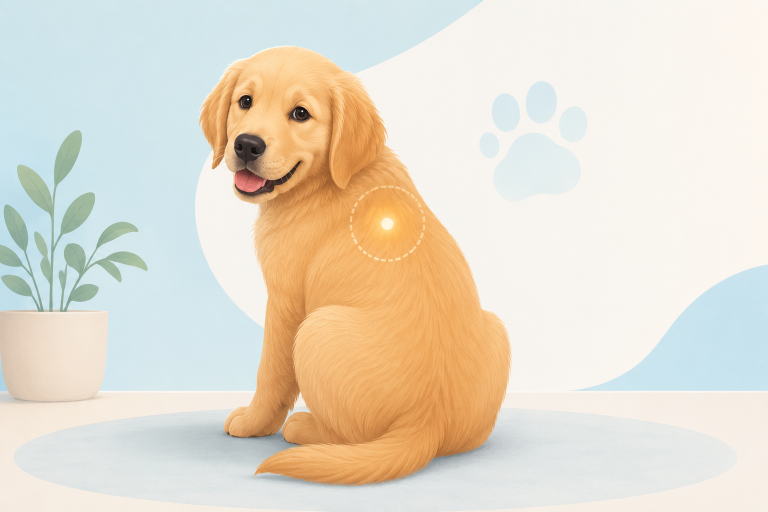
A dog microchip is a small glass capsule, about the size of a grain of rice. Inside that capsule is a tiny computer chip and a copper antenna coil. There’s no battery, no GPS, and no moving parts. It sits quietly under your dog’s skin, usually between the shoulder blades, and does nothing at all until a scanner passes over it.
The chip holds one thing: a unique ID number, usually 9, 10, or 15 digits long. That number never changes. It’s not your dog’s name, your phone number, or any medical information. It’s just a code, similar to a serial number stamped on a product.
How the Chip Talks to a Scanner
Your dog’s microchip uses RFID, which just means radio-frequency identification. In plain terms, the scanner sends out a small radio signal. When that signal reaches the chip, it wakes the chip up just long enough to send back its ID number. No power source is needed inside the chip itself, because the scanner supplies the energy for that split second.
This is why a microchip is not a tracking device. It can’t tell you where your dog is right now, and it doesn’t send any signal until a scanner is held directly over it. A vet, shelter worker, or animal control officer has to physically scan your dog for the chip to do anything at all.
The Three-Part System: Chip, Database, and You
Here’s where most pet owners get confused. A microchip is not one thing. It’s three parts working together.
The chip itself holds the ID number. The database is where that number gets matched to an owner’s name, address, and phone number. And you are the third part, because none of this works unless you’ve entered your information into that database through registration.
Think of the chip like a house number on a door. The number alone doesn’t tell anyone who lives there. Someone still has to check a directory, and that directory only works if your name was actually added to it. That’s exactly what happens when you register your pet’s microchip with National Microchip Registry, also known as NMR.
Ready to close that gap for your own dog? You can complete registration in a few minutes through NMR’s online form.
Why the Chip Alone Doesn’t Bring Your Dog Home
The numbers make this clear. A study of more than 7,700 stray animals across 53 shelters found that microchipped dogs were returned to their owners 52.2% of the time, compared to just 21.9% for dogs with no chip at all. For cats, the gap was even wider: 38.5% return rate with a chip, versus only 1.8% without one.
But the chip on its own doesn’t create that gap. Registration does. The same study found that the single biggest reason microchipped pets weren’t reunited with their families was a wrong phone number on file, responsible for 35.4% of failed cases. The chip worked. The scan worked. The contact information didn’t.
This is why understanding the anatomy of a microchip matters. It’s not just a device, it’s the first link in a chain that only holds together if every part is connected.
What Registration Adds to the Anatomy
Once your dog’s chip number is in a national database, the system finally has all three parts working together. NMR offers a few ways to complete that connection, all one-time payments with no renewals or lapsing records.
| Plan | What’s Included | Price |
|---|---|---|
| Basic Registry | Microchip registration only | $40 |
| Health Vault Registry | Microchip registration plus digital medical records | $50 |
| Total Protection Kit | Registration, QR tag, and medical records, bundled | $89 |
| Instant Recovery Kit | QR tag, microchip registration, and medical records | $99 |
Every plan is searchable nationwide by shelters, vets, and animal control, and NMR accepts microchips from any manufacturer, not just its own. You can see the full breakdown of current registration pricing and pick the plan that fits your dog’s needs.
How Shelters and Vets Use This System in Real Life
When a lost dog arrives at a shelter or vet clinic, the process is always the same. A staff member runs a universal scanner over the dog, usually starting between the shoulder blades. If a chip is present, the scanner displays the ID number.
That number gets entered into a lookup tool, which checks which registry holds the matching contact information. If the registration is current, the shelter gets a name and phone number within seconds. If you’ve recently moved or changed your number, updating your details takes less time than the original registration did.
You can also learn more about the full cost breakdown of dog microchipping if you’re comparing the price of implantation against the price of registration, since they’re two separate steps from two different providers.
The anatomy of a microchip is simple by design. It’s meant to last your dog’s entire life without needing a single repair or replacement. The part that actually determines whether your dog comes home is the part you control: keeping your registration current. A five minute update today can be the reason a shelter calls you instead of a dead end tomorrow.
Not sure if your own dog’s chip is properly registered? You can check your dog’s current status and complete registration through NMR’s secure portal in a few minutes.
Frequently Asked Questions
Q1. What is inside a dog microchip?
A small glass capsule containing a computer chip and an antenna coil, holding one unique ID number. There’s no battery or GPS inside.
Q2. Does a dog microchip contain GPS tracking?
No. A microchip only responds when a scanner is held directly over it. It cannot track your dog’s location in real time.
Q3. How does a microchip scanner work?
The scanner sends a radio signal that powers the chip for a split second, and the chip sends back its ID number in response.
Q4. Is microchipping painful for dogs?
The procedure feels similar to a routine vaccination and takes only a few seconds. Most dogs show little to no reaction.
Q5. Does the chip itself contain my contact information?
No. The chip only holds an ID number. Your contact details live separately in a registry database, connected through registration.
Q6. How long does a dog microchip last?
A microchip is designed to last your dog’s entire lifetime. It has no battery or moving parts that could wear out.
Q7. Can a microchip move around under the skin?
Slight migration is possible but rare, and it doesn’t affect how the chip functions. Scanners are trained to sweep the whole shoulder area.
Q8. What happens if my dog’s chip is scanned but not registered?
The scanner shows the ID number, but with nothing linked to it, the shelter has no way to contact you.
Q9. Can any vet or shelter scan any brand of microchip?
Most modern scanners are universal and can read chips from any manufacturer, which is why registering with a nationally searchable registry matters.
Q10. How do I register my dog’s microchip with NMR?
Visit NMR’s registration page, enter your dog’s chip number and your contact details, choose a plan, and submit. The process takes just a few minutes.
Your dog’s microchip is built to work quietly for life. The one thing it can’t do on its own is speak for you. Registering your pet’s microchip is what turns a passive ID number into an active safety net, and it’s worth checking today, before you ever need it.