Your puppy just got microchipped. You watched the vet do it. You have the paperwork in your hand. You feel done.
You are not done.
A microchip is just a number sitting under your puppy’s skin until it is registered. Right now, that number is not connected to you, your phone, or your address. If your puppy gets lost tonight, a shelter can scan the chip and see a number. Without registration, that number leads nowhere.
This happens to more puppy owners than you would think. Studies show only 58.1% of microchipped animals in shelters were actually registered. That means more than 4 in 10 chipped pets are invisible to the very system meant to bring them home.
Here is exactly what registration does, why it is different from implanting, and how to finish protecting your puppy today.
Implanted Is Not the Same as Registered
Implanting is a physical step. A vet inserts a tiny chip, about the size of a grain of rice, under your puppy’s skin. That part is quick and done.
Registering is a digital step. It links that chip’s number to your name, phone number, and address in a searchable database. This is the part that actually works when your puppy is found.
Think of it like a mailbox with no address on it. The mailbox exists. Mail cannot reach it.
Want the full picture of what is physically inside that chip and how scanners read it? We break it down in how a dog microchip actually works under the skin.
What Happens the Moment Your Puppy Is Scanned
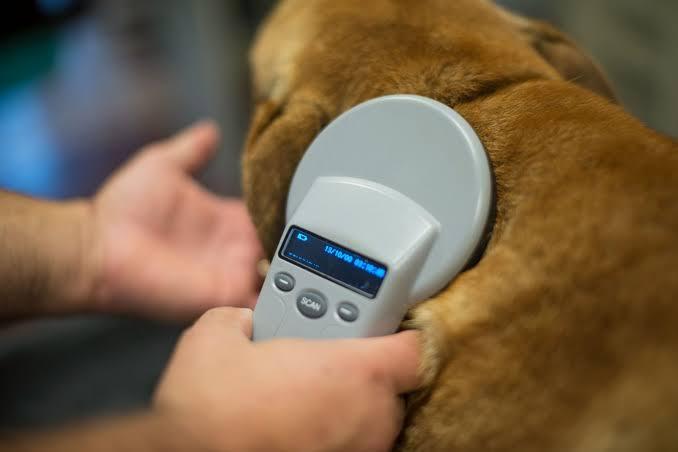
When a shelter or vet finds your puppy, here is the exact sequence:
| Step | What happens |
|---|---|
| Scan | A universal scanner reads the chip’s ID number |
| Lookup | The finder enters that number into a national lookup tool |
| Match | If registered, the tool shows which registry holds your info |
| Call | That registry contacts you directly |
Every step depends on the one before it. If the number is not registered anywhere, the chain breaks at step three. The chip worked. The scanner worked. But there was nothing to find.
We cover this process in full detail in what happens when your pet’s microchip is scanned.
The numbers make the stakes clear. According to a study of over 7,700 stray animals across 53 shelters, dogs with registered microchips were returned to their owners 52.2% of the time, compared to just 21.9% for dogs without one. For cats, it was 38.5% versus 1.8%. Source: nmr.pet/faq
Register your puppy’s microchip today so their number actually leads back to you.
Registering Your Puppy’s Microchip With NMR
You do not need the manufacturer’s own website to register. NMR accepts chips from any brand, so your puppy is covered no matter who implanted it.
| Step | What you need |
|---|---|
| Find the chip number | Vet paperwork, adoption folder, or a quick scan at your vet |
| Create your NMR profile | Your name, phone number, and address |
| Add an emergency contact | A backup person the registry can reach if you cannot |
| Submit and confirm | You get instant confirmation, no waiting |
It takes about ten minutes. There are no renewal fees and no yearly charges to keep the registration active.
If Your Puppy Was Already Chipped by a Breeder or Shelter
Many puppies come home already chipped, but the registration is often still in the breeder’s or shelter’s name. That means if your puppy gets lost, they would call the breeder, not you.
This is common, and it is fixable. You will need to transfer the microchip into your name so your contact details are the ones on file. We walk through the exact steps in how to transfer a microchip to a new owner.
If you skipped this step during those first hectic days home, now is a good time to check.
Keeping It Accurate As Your Puppy Grows
Registration is not a one-time task you finish and forget. If you move, change your phone number, or add an emergency contact, that information needs to be updated too. An old address does your puppy the same harm as no registration at all.
Research on failed reunions backs this up. The single biggest reason microchipped pets were never returned to their owners was a wrong phone number, responsible for 35.4% of failed cases. Source: nmr.pet/faq
If you have not looked at your puppy’s registration since the day they were chipped, it is worth a quick check now.
Set a reminder, check it twice a year, and your puppy’s chip will always be able to do its job.
A microchip is a promise you make the day your puppy comes home. Registration is what keeps that promise. It takes ten minutes now, and it is the difference between a scan that leads nowhere and a phone call that brings your puppy back to you.
Frequently Asked Questions
Q1. Does microchipping automatically register my puppy?
No. Implanting and registering are two separate steps. You must register the chip yourself.
Q2. How much does microchip registration cost?
NMR’s Basic Registry is a one-time $40 fee with no renewals. Compare NMR registration plans and pricing.
Q3. Can I register a chip from any brand?
Yes. NMR accepts microchips from all manufacturers, not just one brand.
Q4. What if I do not know my puppy’s microchip number?
Check your vet paperwork or adoption folder, or ask your vet to scan your puppy for the number.
Q5. My breeder said the chip is already registered. Do I still need to do anything?
Yes. You need to transfer it into your name so your contact details show up, not the breeder’s.
Q6. How long does registration take?
About ten minutes online, with instant confirmation.
Q7. Does the registration expire?
No. NMR registration is lifetime, with no annual renewal fees.
Q8. What happens if I move or change my phone number?
Log in to your NMR account and update your details immediately. Outdated info is the top reason reunions fail.
Q9. Can I add an emergency contact besides myself?
Yes. You can list a backup contact the registry can reach if you are unavailable.
Q10. Is NMR recognized by shelters and vets nationwide?
Yes. NMR participates in the national lookup system used by shelters and clinics across the U.S.